Showing posts with label Nutrition. Show all posts

Friday, April 29, 2016

Taper Madness: The End of Marathon Training

Do you know what a taper is?

If you've ever participated in an endurance event, you surely do. But if you haven't, you may not be aware of how training changes in the last few weeks leading up to a race. It's kinda crazy.
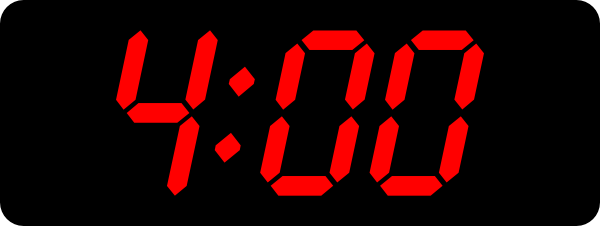
The simple idea behind a taper is that in the two to three weeks before your race, you gradually dial down the intensity and duration of your workouts. So for runners, that means scaling back on the distance, and cutting out speedwork and heavy lifting. It seems counter-intuitive -- why wouldn't you keep working hard right up to the race? But studies have shown that a taper can improve your performance by as much as 3 percent. My goal is to finish under 4 hours, so 3 percent translates to more than 7 minutes.


What Actually Happens to Your Body?

As you probably realize, marathon training pushes your body well beyond what even reasonably fit people are comfortable with. My peak week, right before the taper, included 46 miles of running -- about 7 hours' worth of exercise. (And that doesn't even count warmups, cooldowns, walks to and from work or any other activity.) Really, you're on a razor's edge: You're maximizing your endurance and fitness just short of the point of overtraining or injury.

Lily has been resting up, too!
So by gradually dialing back on mileage, you really accomplish three big things:

  • Replenish your energy stores, particularly your glycogen. Glycogen is the blood sugar your body prefers for energy.
  • Gives your muscles a chance for recovery. In other words, get some rest!
  • Allows you to heal up all those little twinges and dings and aches you've been nursing.

So How Do You Go About Tapering?

Experts say the taper begins "immediately upon completing your last long training run, which is usually between 20 and 23 miles." That's generally three weeks out from the race, as it was in my case, when I went just shy of 22.

You won't find me lifting!
Dial back the mileage. The idea is to start allowing your body more rest, but you don't want to give back all of your gains. So you can't just stop running altogether. Instead, you gradually decrease to the point where, in the week just before the race, you're running just enough to keep your muscles limber. My last Sunday run was 8 miles.

No strength training. The taper is a time for your muscles to repair. In three weeks, you're not going to lose significant strength. But you can do some damage if you keep trying to lift heavy. You want those muscle fibers to repair, not to get torn again. Plus, much as with dialing back mileage, cutting out resistance training will help build glycogen stores. Even non-aerobic training uses energy.

Dietary changes. This is when the carb loading really starts. To avoid the dreaded 20-mile "bonk," you want to go into the race with as much glycogen in your system as you can hold. In week one of the taper, you also try to ramp up on protein, to aid in muscle repair. But after that, you start building up your carbs. In order not to overload on calories, that means a big reduction in fat -- as little as 10 percent of your calorie intake. I've been eating so much fruit, rice, potatoes, pasta, bread and other carbs that I'm ready to cry. After the race, I may just grab a spoon and a jar of pesto. I've also cut even further back on alcohol and limited myself to one cup of coffee a day, since both are diuretics.


But Really, It's Mental

The hardest part of tapering for me is the mental game. I'd just spent the past three months or so working as hard as I possibly could to prepare for the rigor of 26.2 miles. And all of a sudden, you're supposed to take it easy. No, having an extra half-hour because you only ran 3 miles doesn't mean you should add in a HIIT routine. Yes, it's OK to stretch out on the couch. No, there's no benefit to adding in a few extra miles. And go ahead and eat, eat, eat -- just make sure it's carby.

When you've been driving this hard for this long, the idea of letting up is enough to drive you nuts.


Have you ever tapered for a big event? What successes and failures did you encounter? Sound off in the comments, on Facebook or on Twitter!

Tuesday, February 2, 2016

Keep It Simple, Stupid

Do you get confused by all the health and nutrition information out there? Who can blame you? It's way too easy to get lost in all the details.

But most Regular Guys should simply stick with good ole-fashioned KISS -- Keep It Simple, Stupid.

Nutrition

Specialized Diets
There's a diet advocating just about everything. Some so-called experts suggest cutting out all simple carbs. Some say go vegetarian. One that's getting a lot of press lately is the High-Fat, Low-Carb diet. How are you supposed to know which ones work and which ones don't?

For starters, if you're not eating food you like, and enough of it to satisfy you, it's not going to work. You might hold out for a week or even a few weeks, but eventually, if you're miserable, you're going to give it up. As you should.


My other rule of thumb: If a diet purports to circumvent the first law of thermodynamics, it's bogus. You can't beat Calories In, Calories Out.

A More Basic Approach
Let's assume you're just looking to eat healthier overall. Maybe you're not one for smoothies, or you can't see how the Paleo diet would work when cavemen died at age 30. The big trick is to cut your calories (while still getting the nutrients you need).

But are you really going to count your calories? Weigh everything on a food scale? When I was first looking to lose some weight and get healthier, I made it much simpler:
  • Don't eat too much.
  • Don't eat a lot of crap.
Add in a little exercise, and it's a recipe for success for most Regular Guys. So how do you cut down your calories without counting? Here are some things that worked for me:
  • Leave 10 percent of whatever you're eating on your plate. Just eyeball it.
  • Make a point of having a salad or a vegetable at dinner every night. Put more of that on your plate and a little less of the other stuff.
  • Cut your burger, sandwich, whatever in half, and eat that. Still hungry? Cut it in half again, and eat that. Many times we eat more than we should because it's literally in our hands.
About a year ago, I spelled out a few of these tricks and added a few others. Check them out here.

Exercise

What the Heck Should You Do?
Get out on the big, bad Internet, and it won't take you long to find a gazillion different workout plans and even more suggestions for individual exercises. There's cardio vs. strength, compound vs. isolation, weight vs. bodyweight... That doesn't even get into mobility and flexibility, let alone aerobic, threshhold and anaerobic cardio. And you can totally get lost thinking about which of your more than 600 muscles you're targeting with a specific exercise. It's enough to make your head spin -- which is not a good exercise.


Much like with your nutrition, if you want to stick to a workout plan, you need to find the exercises you like doing. Yes, a daily walk is better than nothing. But you do want to be sure to build both aerobic fitness through cardio and strength through resistance training. How much of either depends on your goals. What works for me is close to a 50-50 balance, though I have tipped the scale in favor of running while I build up to the New Jersey Marathon in May.

A More Basic Approach
Really, I think a basic DIY workout program should do two things:
  • Elevate your heart rate for at least 30 minutes at least three times a week -- and preferably more.
  • Target every major muscle area -- core, arms, shoulders, chest, back, glutes and quads, and calves -- at least once a week each.
You can get into more detail as you continue in your fitness journey, but if you're doing those two things, you're already well on your way.


The Fine Print

I've always been very up front on the blog that I am not a pro -- just a guy who loves fitness and wants to foster the conversation. I think my advice is good, but before you make any big changes, be sure you're up to the task -- and if you're not sure, talk to your doctor.

What else should you do? If you learned something here, or even just found an idea you'd like to discuss more, share this article with a friend. The more Regular Guys we have, the better the conversation will be!

Saturday, January 23, 2016

Nutrition vs. Exercise: What Matters More?

It's one of the biggest cliches in the fitness world.

We've all heard or read it: The majority of your fitness happens in the kitchen, not the gym. Depending on who you believe, nutrition accounts for two-thirds, three-quarters or even 80 percent of the equation. But I don't think it's as simple as that.

If you've been reading the blog for a while, you know that I'm a big believer in Calories In, Calories Out. Humans are not exempt from the First Law of Thermodynamics. It's pretty simple: If you burn more calories than you consume, you will lose weight. You can alter either side of that equation -- Calories In or Calories Out. So why do so many people insist that diet has so much more impact than activity does?

The reasoning goes something like this: Most people can find more excess calories in their average daily intake than they can burn off. I'm painting with a really broad brush here, but in a reasonably intense cardio session, you can expect to burn about 10 calories per minute. So if you can devote 45 minutes to your workout four times a week, you can burn about 1800 calories -- more or less the amount it'd take you to lose half a pound. Whereas if you're eating 4000 calories a day, you can cut 1500 or more and still get all the macro- and micro-nutrients you need, and you can do it seven days a week. That's 10,500 a week, or 3 pounds.

So that's it, right? Case closed. Diet is way more important than exercise.

I say no.


Exercise Helps Keep Your Metabolism Going. As you lose weight, your metabolism will drop. This is basic science: The less of you there is, the less fuel it takes to keep you alive. One pound of muscle burns 6 calories a day; one pound of fat, 2. If you lose 10 pounds of fat, your body will actually burn 20 calories less per day. But if you lose 20 pounds of fat and gain 10 pounds of muscle, you'll burn 20 more calories per day. A huge difference? No. But it is an extra 2 pounds per year.

Exercise Keeps You Healthier. Yes, losing weight through diet lowers your risk of obesity-related diseases such as hypertension and diabetes. But it doesn't actually strengthen your heart. Exercise can also strengthen your bones, reduce the risk of some cancers and improve your mental health. It can even help stave off dementia. Simply cutting calories can't do any of that.

Lean Bodies Look Better. Let's face it: A big motivation for most Regular Guys is the desire to look a little better. Sure, you can focus on diet and get lean, but really, you'll just be skinny. A little bit of muscle definition -- we're not talking Schwarzenegger -- is the difference between the skinny guy and the trim, healthy-looking guy. Go ahead, ask your wife.


You're Going to Plateau. How much weight have you gained in the past year? If you've held relatively steady for a while, that means you're already at equilibrium -- you're taking in the same amount of calories you're expending. Now, an obese guy might hit that point at 3000 calories or more a day, even without any significant activity. But for most of us, that point is 2500 or less. And I have news for you: You are not going to be happy, long term, cutting any significant amount from that number. So the obvious solution is to ramp up your Calories Out. Still don't believe me? Recent research shows that physical activity has a higher correlation with healthy weight than diet does.


You'll never get this feeling of accomplishment by dieting!
Working Out Is More Fun Than Dieting. Regular Guys, dieting sucks. You're hungry, you're irritable, there's tons of stuff you "can't" eat, and worst of all, it's not sustainable. A better plan is to find an activity you enjoy and use solid nutrition to fuel yourself. Football star J.J. Watt eats 9000 calories a day -- does he look fat to you?


Now don't get me wrong. I'm not advocating the "see-food diet." Even if you're working your ass off, you can burn only so many calories. You still have to balance the CICO equation. And the best way to do that, of course, is with a diet that's heavy on nutrient-dense foods.

But for my money, the bigger factor is exercise. So get to it!

A quick note: There are some folks for whom this isn't good advice. Someone who's morbidly obese will put himself at significant risk by jumping into an intense exercise program. Other people have health conditions -- such as COPD or heart disease -- that should preclude them from intense exercise as well. And, of course, if you're suffering from a long-term or permanent injury, you need to be sure you won't do further damage through your exercise program. If any of these is you, talk to your doctor about fashioning a diet-and-activity plan that will work for you.


Tuesday, January 5, 2016

6 Ideas to Make New Year's Fitness Resolutions Stick

First off, let me apologize for the absence the last few weeks. Winding down the year at work and the holidays got the better of me, and I've slacked off. And though I'd like to resolve to write at least an article a week, with marathon training on my plate this winter and spring, I don't want to make promises I can't keep.


But I Do Have Something to Talk About: Resolutions

A lot of fitness writers decry New Year's resolutions. They're arbitrary. They're unrealistic. They're too easy to give up on. Sure, that stuff is true. A lifelong commitment to Keeping Fit and Living Your Life shouldn't start with a simple flip of the calendar page. A serious commitment requires a concrete plan and the discipline to stick to it. I get it.

That doesn't mean you shouldn't make a resolution.

Cliche alert: Every journey begins with a single step. You have to start somewhere. If the New Year is what pushes you out the door, that's as good as anything.


So Let's Talk About Making Resolutions Work for You

Incremental Change: Set some achievable, concrete goals, and meet them. Once you do, you can set some more. Running a marathon -- or even a 5K -- might not be in your immediate future. That's OK. Maybe for now you can find time for a 15-minute walk every day. A brisk walk, not a stroll. Or if you're not sure about joining a gym and trying to lift, check out some basic bodyweight moves, like pushups and planks. You'll get better quickly, and then you can set new goals.

Do Stuff You Like: You're not going to keep doing something you absolutely hate. That's not just a Regular Guy thing -- it's just human nature. If you dread it, you'll find every reason not to do it. So find activities you enjoy. Maybe for you that's walking, or playing basketball, or riding a bike. Or maybe it really is picking things up and putting them down. Whatever you do, don't make fitness into a punishment.

Don't Overhaul Your Diet All at Once: A lot of people are tempted to cut their calories down to some tiny amount, ramp up the protein to 300 grams a day, cut out any trace of simple carbohydrates and keep a minimum 10-foot distance from added sugar. Slow down. You're going to make yourself miserable, which means you're destined to fail. And really, unless you have at least some understanding of what you're doing, you're as likely to do harm as you are good.

Learn Some Basics: You're not going to get anywhere if you don't understand the basic principles of nutrition and fitness. You don't have to get a PubNet subscription and bury yourself in research. But find a few good resources, like this one, to learn the essentials. Do you know what a macro is? How many calories do you have to burn to lose a pound? What's the difference between HIIT and steady-state cardio? The trick to achieving a goal is knowing how to get there.

Have a Back-Up Plan: Especially during the coldest months, you may not be able to exercise the way you want to. Weather is a major issue. So is daylight, especially if you live in a rural area where there's lots of wildlife. But even setting that aside, sometimes life gets in the way. If you want to run but can't hit the roads, find a cheap gym like Planet Fatness to use the treadmills. If you just want to get your heart rate up, find a good HIIT workout you can do in your living room. If you're snowed in and were hoping to lift, figure out some bodyweight alternatives. And can we talk about cold for a minute? 35 degrees isn't cold -- you just need warmer gear. I'm a notorious baby, but it has to be in the 25 range or below to keep me indoors. (Caveat: As I write this, it's 12 degrees with a wind chill of 0. I'm not running.) Don't let circumstances derail your progress.

Think About Future You, Not Present You: Many fitness-resolution articles suggest that after people miss a few days, or have a fridge binge, they say, "Screw it, it's a lost cause." Really? I don't think people do that. My wife turned me on to this concept: "Many of the decisions we make seem to suggest that we think about our future self as a different person than the one we are today." We're wired to make ourselves happy in the now. But you do lots of things for Future You. You save for retirement. You get your car's oil changed. You wash the dishes after dinner, not just when you need something clean to eat on. I'm not suggesting you pass up every opportunity for fun or enjoyment -- as I always say, if you really want the cookie, just eat the damn cookie. Just keep Future You in mind when making all these small decisions.


Tying It All Together

The bottom line with New Year's resolutions: The more easily you can fit them into your everyday life, the more likely you are to stick with them.
  • Don't bite off more than you can chew, and make sure you enjoy what you're doing. Start with some basic activity, make some small changes in your diet and don't turn it into a chore.
  • Understand the why of what you're doing. Think about Future You, and learn the basics to get there. 
  • Know that it's not a straight line. You need a backup plan, and sometimes, it just won't work at all. That's OK if you're consistent in the long run. 
What are you doing about your New Year's resolutions? I wanna hear from you! Leave a comment below, or sound off on Facebook or Twitter.